
Sep 12, 2026
Luxury Real Estate Marketing in Dubai: The 2027 Playbook for Attracting High-Net-Worth Buyers
A data-backed 2027 playbook for Dubai luxury real estate marketing: branding, SEO, GEO/AI search, paid media & HNW buyer acquisition. Read SOLD Agency's guide.
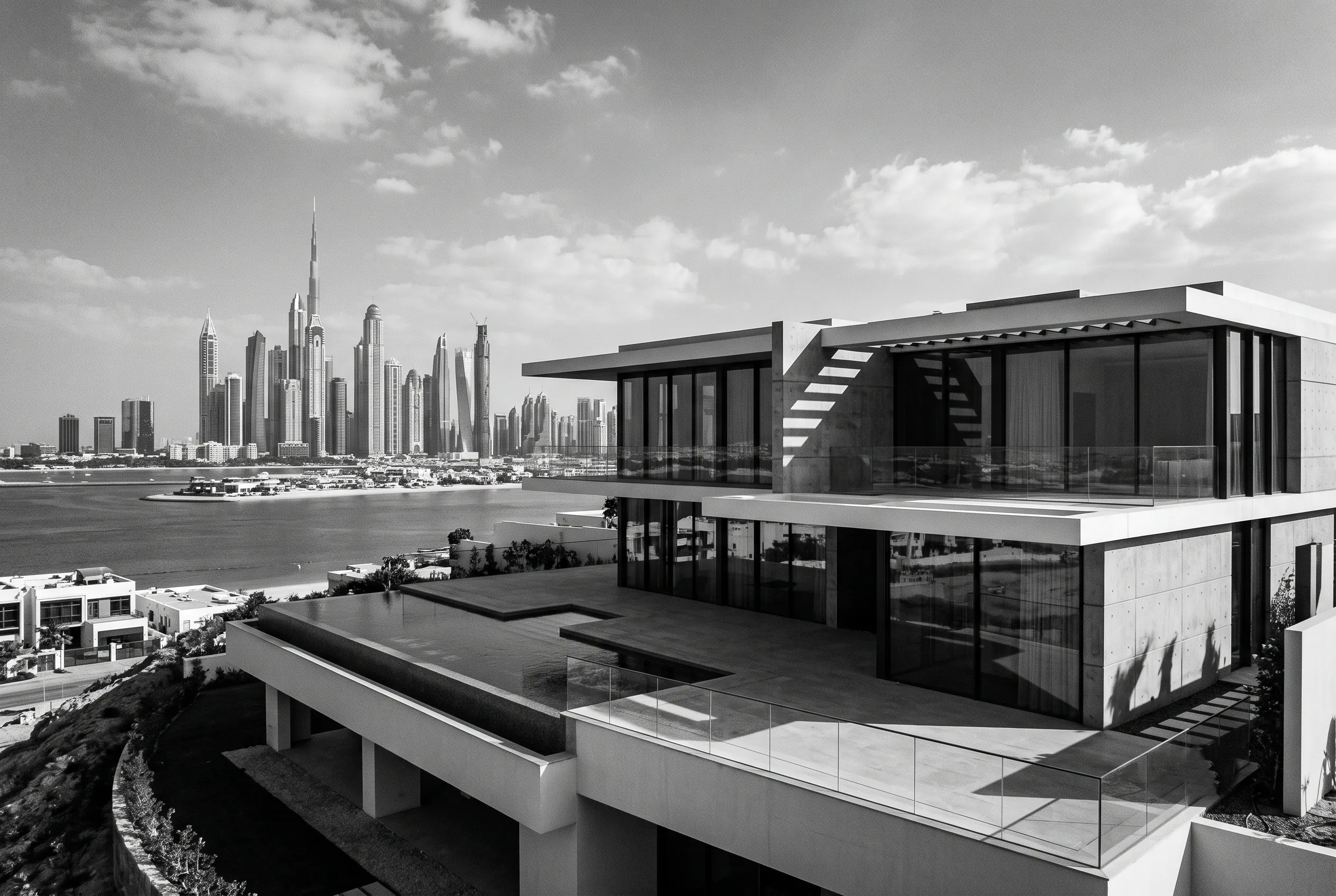
By SOLD Agency - Strategy, Branding, Creative, Digital, Performance & Growth for Dubai’s Most Ambitious Property Brands
Dubai’s luxury property market does not have a demand problem. In the first half of 2026 alone, the emirate recorded 296 residential sales worth a combined US$5.1 billion, up 14% year-on-year and 49% higher than the same period in 2024, according to Knight Frank. Foreign investment in Q1 2026 reached AED 148.35 billion, with buyers from more than 150 nationalities participating in the market, per Dubai Land Department (DLD) figures.
What Dubai’s luxury sector does have is a marketing problem: too many developers and agencies are still pitching “prime location, world-class amenities, unmatched ROI” to a buyer who has already read that sentence forty times this week, on forty different websites, and is now asking ChatGPT to summarise the forty websites for them.
This playbook is for developers, brand and marketing leaders, and agency partners who need a 2027-ready strategy - one built on where the market actually is today, and clearly separated from where credible analysts expect it to go next. We will cover the buyer landscape, what has genuinely changed in luxury property marketing, brand positioning, SEO and generative engine optimization (GEO), video and social, paid media, international buyer acquisition, website conversion, budgeting, KPIs, common mistakes, and the questions buyers and marketers are actually typing into Google and AI search tools right now.
1. Dubai’s Luxury Real Estate Market: The Buyer Landscape You are Marketing Into
Before any brand, campaign, or content strategy makes sense, it has to be built on an accurate read of the market. Here is where things stand in 2026.
The ultra-prime segment is outperforming the wider market. Dubai’s overall residential market cooled slightly in H1 2026 - 79,281 transactions worth AED 221.4 billion, down from 91,973 transactions worth AED 262.6 billion in H1 2025, according to Engel & Völkers’ market analysis. However, the US$10 million-plus segment moved in the opposite direction, setting a new first-half record. That divergence is the single most important fact for anyone marketing luxury property in Dubai right now: broad-market softness does not mean softness at the top. It means the top is behaving like its own market, with its own rules.
Branded residences have gone from niche to standard. Dubai is the number one branded residences market in the world, and branded units commanded an average of $997 per square foot in H1 2026 against $641 for comparable non-branded stock - a 56% premium, according to Khaleej Times’ analysis of DLD data. Other analysts (Savills, Knight Frank) put the global branded premium closer to 30–35%, with Dubai’s own market showing a wide range from roughly 20% up to 60%+ depending on the brand, location, and building age. Whatever the precise number for a given project, the direction is consistent: brand partnership is now a pricing lever, not a marketing gimmick.
Cash still rules, but financing is creeping in. Cash buyers continue to dominate the luxury segment, though improved mortgage affordability during 2026 has widened participation among end-users in Dubai’s mid-market - a trend developers targeting the upper-mid and entry-luxury tiers should watch, per Engel & Völkers.
Buyers are more selective, not just wealthier. Bayut’s market data describe a buyer base that increasingly rents ultra-luxury property before committing to a purchase, and that weighs quality, location, and future value more heavily than the headline price. In a market with more supply and more choice, “expensive” is no longer a proxy for “desirable.”
The Buyer Landscape, By Numbers
Buyer nationality data is worth internalizing because it should directly shape campaign geography and creative localization, not just be a footnote in a pitch deck. According to Khaleej Times’ analysis of Harbor Real Estate and DXBinteract data, the leading foreign buyer nationalities in early 2026 were:
- India - approximately 20.6% of foreign purchasing activity
- United Kingdom - approximately 13.3%
- Egypt - approximately 12.6%
- United States - approximately 9%
- Pakistan - approximately 6.9%
- Saudi Arabia and Australia - approximately 5.7% each
- Germany, France, Canada - smaller but consistent shares
Russian and CIS buyers remain, per multiple market reports, among the most consistent presences in the luxury and branded residence segments, even as their overall transaction share has moderated. Chinese buyer activity has also picked back up as outbound travel and investment restrictions have eased.
“Read our full 2026 Dubai luxury market report”.
The takeaway for marketers: Dubai’s luxury buyer is not one persona. It is at least half a dozen overlapping personas - the South Asian entrepreneur relocating a family office, the European lifestyle buyer diversifying out of a heavily taxed market, the Gulf neighbor buying a second home an hour from Riyadh or Jeddah, the Russian or CIS buyer prioritizing a stable jurisdiction, and the American or Western buyer discovering Dubai as a serious alternative to Miami or London. A single generic campaign cannot speak convincingly to all of them.
2. What Has Actually Changed in Luxury Property Marketing
It is worth being precise about what is actually new, because “everything has changed” is a lazy claim that most marketing content makes without evidence. Three shifts are genuinely structural.
1. Buyers arrive pre-informed, and they expect you to match that. Dubai buyers today routinely cross-reference asking prices against platforms like DXBinteract, Bayut’s transaction tools, and Property Finder before they ever speak to an agent. A senior Dubai broker put it bluntly in a recent Gulf News feature: There is no room for vague pitches. Agents now need to show community trends, yield comparisons, and price histories on the spot.” Marketing that cannot survive five minutes of independent buyer research is marketing that erodes trust rather than building it.
2. Regulation has tightened around what you can claim, and how. RERA’s Trakheesi permit system requires a valid, visible permit number on every property advertisement - including social media posts and influencer content - and the Dubai Land Department now runs an AI-powered advertising governance platform that has reportedly reviewed over 279,000 property ads and automatically modified around 29% of them for non-compliance. Brokers are also barred from posting “sold” or “just sold” claims before a transaction is formally registered. For marketing teams, this means creative approval workflows now need a compliance checkpoint that did not exist five years ago.
3. Discovery is splitting between search engines and AI answer engines. This is the single biggest structural change for 2027 planning, and it gets its own section below. The short version: a meaningful and growing share of research now happens inside a conversational AI tool rather than a list of blue links, and most Dubai developer and agency websites are not built with that in mind yet.
Alongside these structural shifts, buyer expectations have moved too: wellness and longevity amenities are increasingly replacing purely decorative luxury signifiers, buyers are more willing to rent ultra-luxury property before buying, and quality, delivery track record, and post-handover service now weigh as heavily as location and brand name - especially as more branded and off-plan inventory enters the resale market and has to prove it holds its premium.
3. The 2027 Outlook: Where Credible Analysts Expect the Market to Go
A note on method: everything above this point is current, sourced from 2026 market data. Everything in this section is a forward-looking view - informed by the trajectory of that data, industry commentary, and Dubai’s own stated economic strategy - not a confirmed fact. We have labeled it as such throughout.
- Branded and design-led inventory will continue to grow, but differentiation will shift from trend names to delivery. Industry commentary already reflects this: as Elias Hannoush of Morgan’s International Realty told Khaleej Times, the branded residences category “has achieved significant scale, but scale changes the basis of competition… pricing discipline, development quality, delivery, service and long-term operations will increasingly determine which projects preserve their positioning.” Our prediction: by 2027, marketing that leans purely on “which global brand is attached to this tower” will underperform marketing that can prove delivery track record, service standards, and resale liquidity.
- AI-assisted discovery will account for a materially larger share of top-of-funnel research. Gartner has projected a roughly 25% decline in traditional search engine volume as a broader trend tied to AI adoption. At the same time, GEO-focused industry researchers report that referral traffic from large language models is growing several hundred percent year over year in some markets. Our prediction: by 2027, a meaningful share of qualified international inquiries for Dubai luxury property will originate from a buyer who first asked an AI assistant a question like “best areas for a $5M waterfront villa in Dubai” - and developers who have not structured their content to be citable in that moment will lose visibility theydo nott even know they are losing.
- Off-plan payment plans will continue to draw scrutiny as more projects reach handover. With 71% of H1 2026 volume being off-plan, per MERED, 2027 and 2028 will bring a wave of handovers that test whether marketing promises matched delivery. Our prediction: developers with strong delivery track records will increasingly lead with that record as a marketing asset rather than a footnote.
- Personalization and CRM-driven nurture will become table stakes for ultra-prime lead handling, given how long HNW purchase cycles run and how many touchpoints (private viewings, family office conversations, immigration/Golden Visa advisory) sit between first contact and signature.
- Sustainability and wellness positioning will shift from a differentiator to a baseline expectation in new luxury launches, echoing trends already evident in branded-residence developments around longevity clinics and wellness-led design.
None of this is guaranteed. It is a reasoned extrapolation from where the data and expert commentary point today, and it should be treated as directional planning input - not a forecast to build a single campaign around.
4. Brand Positioning for Luxury Developers: Beyond “Prime Location, World-Class Amenities”
If you strip the boilerplate out of most Dubai luxury property marketing, what is left is often startlingly thin: a location, a view, a list of amenities, and a rendering. That is a specification sheet, not a brand.
Positioning starts with a defensible point of difference, not a superlative. “The most luxurious address in Dubai” is a claim every developer makes and no buyer believes. A defensible position answers: why this project, for this buyer, instead of the eleven other comparable launches this quarter? That might be a genuinely unique site (a private island, a specific view corridor that cannot be replicated), a specific brand partnership with real operational substance behind it, a design language tied to a recognized architect or studio, or a service model that goes further than the market standard.
Positioning has to withstand scrutiny because your buyer will scrutinize it. Given how comparison-literate today’s Dubai buyer is (see Section 1), positioning claims about yield, delivery timelines, or resale performance need to be defensible against publicly available transaction data - not just persuasive in a brochure.
A useful framework: the Three Pillars of Luxury Positioning
A brand platform built on these three pillars gives every downstream marketing decision - tone of voice, photography direction, launch film concept, sales gallery experience - a consistent filter to run through, instead of being reinvented for every campaign.
Positioning also has to be nationality- and segment-aware without becoming fragmented. A single-core brand platform should flex its emphasis (not its message) across audiences: a UK buyer may respond more to lifestyle and tax efficiency; a Saudi buyer to proximity and privacy; an Indian entrepreneur to long-term residency and legacy; a Russian or CIS buyer to jurisdictional stability. Getting this right is brand strategy work, not translation work - a literal translation of the same brochure into five languages is not audience-aware positioning.
“See how SOLD Agency builds luxury developer brand platforms”
5. Digital Marketing & SEO for Dubai Luxury Real Estate
SEO for Dubai luxury real estate is not dead, but it has matured. Ranking for “luxury villas Dubai” is a vanity metric if the traffic does not convert into qualified inquiries from buyers who can actually transact at that price point.
What still works, and works hard:
- Long-form, expertise-led content. Deal Machine OS’s 2026 real estate content analysis found that long-form content (2,000+ words) ranks meaningfully higher than short posts - consistent with what Google’s helpful-content systems reward: depth, specificity, and demonstrated expertise over thin, templated pages.
- Community and area-specific content, not just project pages. Buyers researching Palm Jumeirah, Emirates Hills, Jumeirah Bay Island, or Dubai Hills Estate want granular, current information - price trends, transaction benchmarks, lifestyle context - not a repackaged brochure.
- Structured, technically clean websites. Site speed, mobile experience, and clean information architecture remain ranking and conversion factors simultaneously; a slow, image-heavy luxury site actively works against both goals.
- Transaction-data-backed content. Because sophisticated buyers already check DXBinteract, Bayut, and Property Finder data independently, content that cites and contextualizes real transaction data earns more trust - and more organic authority signals - than adjective-heavy copy.
What has changed in practice:
- Google’s AI Overviews are now part of the SERP for a meaningful share of property queries. However, real estate–specific research (Surfeo, 2026) suggests AI Overviews currently trigger for a relatively small share of real estate queries compared to other categories, meaning classic organic ranking still carries real weight in this vertical, even as AI-native discovery grows elsewhere.
- E-E-A-T (Experience, Expertise, Authoritativeness, Trust) matters more for property content than almost any other vertical, because the financial stakes are enormous and Google treats real estate and finance content with similar scrutiny. Author credentials, RERA license numbers, and cited sources all contribute.
- Keyword strategy has to work across intent stages, from broad awareness terms (“Dubai luxury real estate market”) through comparison and consideration terms (“branded residences vs regular apartments Dubai”) to high-intent transactional terms (“Palm Jumeirah villas for sale”).
6. GEO: Getting Discovered in ChatGPT, Gemini, Perplexity and Google AI Overviews
This is the section every Dubai developer and agency marketing lead should read twice, because it is the one most competitors have not acted on yet.
What GEO actually is. Generative Engine Optimization (also called Answer Engine Optimization, or AEO) is the practice of structuring your brand’s content and digital footprint so that AI platforms - ChatGPT, Gemini, Perplexity, Google AI Overviews, and others - cite, summarise, or recommend you when someone asks a relevant question. It is not a replacement for SEO; it is what you do in addition to SEO, because the two disciplines pull on overlapping but distinct signals.
Why it matters specifically for Dubai luxury real estate right now:
- Industry-wide GEO research shows that referral traffic from large language models is growing significantly year over year, and that ChatGPT alone now handles hundreds of millions of weekly queries, per OpenAI’s own reported figures.
- Real-estate-specific analysis (Surfeo, 2026) found that while Google AI Overviews trigger on only a modest share of real estate search queries today, conversational AI is fast becoming a genuine parallel channel where buyers ask for agent, developer, or area recommendations directly.
- Google’s Gemini is now grounded directly in Google Maps and Business Profile data, and ChatGPT draws on Bing’s index and structured directories - meaning your Google Business Profile, structured data, and directory consistency now double as AI-visibility infrastructure, not just local SEO housekeeping.
How AI answer engines actually work - and why it changes your content strategy:
When someone asks an AI assistant a complex question - “which Dubai developer has the best track record with branded residences?” - the model typically breaks that into smaller sub-questions (“Dubai branded residences developers,” “Dubai developer delivery track record,” “branded residences Dubai reviews”) and searches for each one separately. This is sometimes called query fan-out. The practical implication: your content needs to directly and clearly answer the sub-questions a buyer’s larger question would fan out into - not just the headline query.
A practical GEO checklist for Dubai luxury real estate brands:
- Write in clear, extractable, answer-first structures. Lead sections and FAQs with a direct, quotable answer in the first sentence, then support it. AI systems favor content that’s easy to lift a clean answer from.
- Keep your entity information consistent everywhere. Company name, RERA license number, address, and key facts should match exactly across your website, Google Business Profile, Bing Places, LinkedIn, and major directories. Inconsistency undermines the “confidence” AI systems need to cite you.
- Publish original data and market commentary, not just rewritten press releases. AI systems weight source credibility heavily; being the source of a data point or expert view - not the fifth site to repeat it - earns you the citation.
- Structure content with clean, semantic headings and schema markup (see Section 15 and the schema deliverables in this piece) so both crawlers and AI retrieval systems can parse your content’s structure reliably.
- Maintain a technically crawlable site. This sounds basic, but LLM-focused SEO researchers consistently flag broken crawlability - blocked resources, JavaScript-dependent content, thin robots.txt configuration - as the single most common reason a brand is invisible to AI systems.
- Build genuine third-party authority signals: press coverage, expert quotes in trade publications, credible backlinks. AI systems, like traditional search engines, use external validation as a trust signal - you cannot “prompt-engineer” your way to being cited without it.
A new measurement mindset is required, because GEO does not show up in classic web analytics. Instead of only tracking organic sessions, forward-looking Dubai marketing teams should start tracking brand citation frequency - how often your brand or projects are named when relevant questions are asked across ChatGPT, Gemini, Perplexity, and Google AI Overviews - even if that currently requires manual spot-checking rather than a mature analytics platform.
“How SOLD Agency builds GEO strategy for Dubai property brands”
7. Social Media, Video & Storytelling for HNW Audiences
Luxury buyers are not immune to short-form video -they are just a different audience for it. The format research holds across markets: content 15–60 seconds long consistently outperforms static posts and longer editing in terms of engagement across Instagram Reels, TikTok, and YouTube Shorts.
However, format is not strategy. For a Dubai luxury audience, the winning approach usually separates into three distinct content jobs:
- Discovery content (short-form, high-reach): Reels and Shorts built around cinematic teasers, lifestyle moments, and area storytelling - designed to build awareness with a broad audience, not to close a $10M sale on Instagram.
- Credibility content (long-form, owned platforms): YouTube remains the strongest platform for launch films, architect and developer interviews, and in-depth project walkthroughs - content that a seriously considering buyer will actively seek out once they are past first awareness.
- Relationship content (private, high-touch): For genuinely ultra-prime transactions, the most effective “content” is often a private viewing experience, a bespoke digital brochure, or a one-to-one video briefing - not public social content at all. Luxury marketing research consistently notes that at the very top of the market, buyers respond to narrative and lifestyle framing rather than conventional advertising.
Practical notes specific to Dubai:
- LinkedIn carries disproportionate weight for developer B2B storytelling, investor relations, and reaching family offices and institutional buyers directly - a channel many residential-focused teams under-invest in relative to Instagram.
- Every piece of paid or organic content that promotes a specific project or price must carry a valid Trakheesi permit reference where required, including influencer and UGC content - this is a compliance requirement, not a stylistic choice (see Section 13).
- Captioning matters more than most teams assume: a large share of social video is watched with the sound muted, and luxury storytelling that depends entirely on ambient sound or voiceover loses much of its intended audience.
8. Paid Advertising & Lead Generation
Paid media for Dubai luxury real estate has one job: generate qualified conversations with buyers who can actually transact at the price point - not the maximum volume of form-fills.
Realistic benchmarks to plan against (drawn from broader real estate industry data; Dubai-specific luxury benchmarks vary by project and should be tracked independently):
(Benchmarks above are general real estate industry figures from Promodo and Ylopo’s 2026 research, not Dubai-luxury-specific; treat them as a planning reference, and validate against your own project’s data as soon as you have a meaningful sample.)
What actually moves the needle for high-ticket lead quality:
- Speed to response is a conversion lever, not an operations detail. Research widely cited across the industry (originating from MIT/InsideSales.com studies) shows leads contacted within five minutes convert at dramatically higher rates than leads contacted even 30 minutes later. For a $5M+ inquiry, a same-hour, ideally same-minute, human response from a trained advisor is table stakes.
- Landing pages should match the ad’s specific promise, not funnel every click to a generic project homepage. A campaign about a specific penthouse should land on that penthouse, with pricing context and a clear next step.
- CRM-led nurture matters more than in almost any other advertising category, because HNW purchase cycles routinely span months and involve multiple stakeholders (spouse, family office, immigration advisor, private banker).
- Retargeting and sequential storytelling outperform one-shot ads for this audience - a buyer who watches 80% of a launch film is a fundamentally different prospect than a cold click, and should be treated differently in the funnel.
9. International & HNW Buyer Acquisition: Winning Across 150+ Nationalities
Dubai’s single biggest structural marketing advantage - and its single biggest marketing challenge - is the same fact: buyers come from everywhere. Over 150 nationalities purchased property in the market in early 2026 alone, according to DLD figures.
This means a genuinely localized acquisition strategy, not translated ads. A credible international acquisition plan typically requires:
- Market-specific creative and messaging, built around what each buyer segment actually cares about (see Section 4’s positioning notes on nationality-aware emphasis).
- Language and platform fit. WeChat and RED (Xiaohongshu) matter for Chinese buyers in ways that Instagram doesn’t; VK and Telegram carry weight for Russian/CIS audiences; WhatsApp Business is nearly universal across South Asian and Middle Eastern buyer segments for direct advisor communication.
- Golden Visa positioning done credibly. The AED 2 million residency investment threshold is a genuine, powerful hook - but it needs to be presented as one legitimate benefit among several, with accurate, current criteria, rather than as the entire pitch. Buyers researching this topic are typically also comparing Dubai against other residency-by-investment markets, so vague or outdated visa claims are quickly exposed.
- On-the-ground presence in source markets. Roadshows, private events in London, Mumbai, Riyadh, and increasingly China, and partnerships with local private banks and wealth managers remain some of the highest-trust acquisition channels for ultra-prime transactions - digital marketing’s job here is often to warm the audience before an in-person touchpoint, not to close the deal alone.
- Compliance and currency clarity. International buyers weighing an AED-pegged, dollar-correlated market against their home currency need clear, honest content about what that peg means for them - this becomes genuine content marketing value, not just a footnote.
A segment worth specific attention: renters-before-buyers. Bayut’s market data show a meaningful segment of HNWIs renting ultra-luxury properties before committing to a purchase. That is a nurture opportunity, not a lost lead - a sophisticated CRM and content strategy should be built to convert a $150k/year tenant relationship into an eventual $15M purchase relationship over time.
10. Luxury Real Estate Websites & Conversion Rate Optimization
Your website is the one asset every other channel - SEO, paid media, social, PR, even a private referral - eventually sends a buyer back to. If it does not convert, everything upstream is subsidizing a leak.
The baseline numbers are sobering. Broader research on the real estate industry (Adjet Marketing, 2026) puts the average real estate website conversion rate at roughly 2.9%, with top-performing sites reaching 5.6% or higher. The gap between those numbers is rarely about traffic quality - it is almost always architecture, content, and testing discipline.
What consistently separates high-converting luxury real estate websites:
- Self-selecting homepage architecture. Rather than a single generic funnel, the homepage should let a buyer immediately self-identify (international investor, end-user relocating, existing owner, agent/broker partner) and be routed into a tailored path.
- Fast load times and flawless mobile experience. For a visually driven category like luxury property, this is a direct tension - massive imagery and video versus speed - that has to be actively engineered, not left to chance. A slow luxury site actively damages the brand it is trying to elevate.
- Short, low-friction inquiry forms with a clear, immediate next step communicated (a callback window or a private viewing invitation) rather than a generic we will be in touch.”
- Trust signals placed prominently and specifically: RERA license details, verifiable transaction history, press coverage, and named advisor profiles - generic testimonials carry much less weight with this audience than specific, checkable credentials.
- Content depth beyond the listing. Area guides, transaction benchmarking tools, and market commentary keep sophisticated buyers on-site longer and build the trust that a bare listing page cannot.
- Structured data implementation (see Section 15) that supports both traditional SEO and GEO simultaneously.
Testing discipline matters as much as design. CRO for this category is not a one-off redesign; it is an ongoing program of hypothesis-led testing on hero messaging, form length, CTA placement, and page speed - treating the website as a living asset rather than a finished project.
"See SOLD Agency’s luxury real estate website work”
11. A Practical 2027 Marketing Framework & Budget Allocation Model
There is no universal “right” marketing budget for a Dubai luxury development - it depends heavily on project scale, launch timeline, and whetheryou aree building a developer brand or marketing a single project. However, a defensible allocation framework, built around the funnel stages that actually matter for this buyer, looks like this:
How this shifts across a project lifecycle:
- Pre-launch (3–6 months out): Weight toward brand strategy, PR seeding, and content foundations. This is when positioning gets set, and SEO/GEO content needs time to be indexed and gain authority before launch traffic arrives.
- Launch (0–3 months): Weight shifts hard toward video/creative and paid media, with PR and events peaking around the launch moment itself.
- Post-launch / sell-through: Weight shifts back toward CRM-led nurture, retargeting, and continued content that supports resale and secondary-market credibility - the work that protects the brand’s value long after the launch campaign ends.
A genuinely 2027-ready framework treats GEO and content as infrastructure investment, not a discretionary add-on - because the content built today is what AI systems will be citing (or ignoring) in 12–18 months.
12. KPIs and How to Measure ROI
Vanity metrics are a real risk in luxury real estate marketing because the category naturally produces impressive-looking numbers - reach, impressions, follower counts - that have almost no relationship to whether units are selling.
The KPI stack that actually matters, by funnel stage:
Two measurement principles worth building in from day one:
- Track cost per qualified lead, not cost per lead. A cheap, high-volume lead source that produces almost no serious buyers is a worse investment than an expensive channel that reliably produces transactable inquiries - but only cost-per-qualified-lead tracking reveals that.
- Start tracking AI/GEO visibility now, even manually. Because there is not yet a mature, universal analytics standard for “how often are we cited in ChatGPT/Gemini/Perplexity,” the pragmatic approach in 2026–2027 is a recurring manual audit: ask the platforms your buyers are likely to use, and log whether and how your brand appears. It is unglamorous, but it is the only way to know if your GEO investment (Section 6) is working before formal tooling catches up.
13. Common Luxury Real Estate Marketing Mistakes in Dubai
14. What is Actually Working: Real-World Signals
Rather than presenting unverifiable “case studies,” it is more useful - and more honest - to point to documented, sourced signals from the current market aboutwhat iss working structurally:
- Branded partnerships with genuine operational substance are holding premiums; those without it are showing signs of stress. Analysts covering the branded residence category increasingly note that once construction-period payment plans end and units enter the resale market, projects are being tested on delivery and service quality, not brand recognition alone - a signal that marketing built on operational proof will age better than marketing built purely on brand association.
- Design-led, quality-first positioning is emerging as a differentiator among new entrants. Newer developers entering Dubai’s luxury market are explicitly building their public positioning around architectural quality, privacy, and long-term value creation - a response to a market that fäm Properties’ CEO described as one where the strength of established locations is what “moves a location from emerging to established in buyers’ minds.”
- Data transparency is becoming a competitive advantage, not just a compliance requirement. Portals like Bayut have built entire product lines (transaction benchmarking, verified listings, valuation tools) explicitly because, in their own words, “relying solely on marketing and perception is no longer enough” for today’s luxury buyer - a direct signal that marketing that incorporates verifiable data outperforms marketing that avoids it.
15. FAQs: What Buyers and Marketers Are Actually Asking
What makes Dubai’s luxury real estate market different from other global luxury markets? Dubai combines zero income and capital gains tax, 100% foreign freehold ownership in designated areas, a Golden Visa residency pathway tied to property investment (from AED 2 million), and buyer participation from over 150 nationalities - a genuinely global, tax-efficient, high-liquidity combination that few other luxury markets offer together.
Are branded residences worth the price premium in Dubai? Branded residences in Dubai have traded at premiums ranging from roughly 20% to over 60% depending on the brand, location, and building maturity, according to various 2026 market analyses. The premium tends to hold best where the brand has a long-tenor operational contract, genuinely limited supply, and a diversified international buyer base, and tends to compress over time where it is based on brand name alone.
How is AI search changing real estate marketing in Dubai? Buyers are increasingly using tools like ChatGPT, Gemini, and Perplexity to research markets, areas, and even specific developers before they ever visit a website. Generative Engine Optimization (GEO) - structuring content to be clearly extractable and citable by these systems - is becoming a necessary complement to traditional SEO, particularly as Google’s AI Overviews and conversational assistants take on a larger share of research behavior.
What is the minimum investment for a UAE Golden Visa through real estate? As of 2026, a property investment of AED 2 million qualifies for a 10-year renewable Golden Visa; lower investment thresholds (from AED 750,000 in some reported structures) have been associated with shorter residency terms. Buyers should always verify current thresholds directly with official UAE government sources, as investment-residency criteria can be updated.
Which nationalities are buying the most luxury property in Dubai right now? Indian nationals lead foreign purchasing activity at roughly 20–22% of transactions in early-to-mid 2026, followed by UK, Egyptian, American, and Pakistani buyers, with Saudi, Russian/CIS, and Chinese buyers also representing consistent, significant shares, according to multiple 2026 market reports citing DLD and DXBinteract data.
How much should a developer budget for marketing a luxury Dubai launch? There is no universal figure, but a defensible framework allocates roughly 10–15% to brand strategy, 15–20% to content/SEO/GEO, 20–25% to video and creative production, 20–25% to paid media, 15–20% to PR and international activation, and 5–10% to website/CRM infrastructure - shifting weight across pre-launch, launch, and post-launch phases (see Section 11).
What do RERA’s advertising rules require for property marketing in Dubai? Every property advertisement - including social media and influencer content - must display a valid Trakheesi permit number, and off-plan advertisements must disclose the developer’s name, escrow account details, expected completion date, and service fees. “Sold” claims cannot be made before a transaction is formally registered, and the Dubai Land Department now uses an AI-based system to monitor compliance across published ads.
Work With SOLD Agency
SOLD Agency partners with Dubai and the UAE’s most ambitious property developers, brands, and agencies across strategy, branding, creative, digital, performance marketing, production, and growth. If your 2027 marketing plan needs to move beyond generic luxury clichés and into a strategy built on real market data, defensible positioning, and genuine AI-search visibility, let us talk about your next launch
Tell us about your business, and we’ll create a custom plan to grow your traffic, leads, and predictable revenue.


Project or Idea, big or small, It matters.
We'd love to hear that.
We'd love to hear that.
better get


